

Driver fleet training reduces preventable breakdowns and repair costs by teaching commercial drivers to spot and report early signs of mechanical failure before they strand vehicles or trigger expensive roadside repairs. When a driver notices a soft brake pedal, unusual tire wear, or a dashboard warning light and reports it immediately, your fleet avoids the cascading costs of towing, missed deliveries, and emergency labour. A structured training program typically takes two to four weeks to roll out across a mid-sized fleet and delivers measurable returns: fleets that train drivers on basic preventive maintenance checks report 15 to 25 percent fewer roadside breakdowns and up to 20 percent lower annual maintenance spend, according to National Safety Code compliance audits conducted across Canadian provinces in 2025 and 2026.
The business case is straightforward. Every unplanned repair event costs Canadian fleets an average of $1,200 in parts, labour, and lost productivity, while driver-detected issues caught during pre-trip inspections cost a fraction of that to address during scheduled service. Training also strengthens compliance with provincial circle-check requirements and National Safety Code standards, reducing the risk of out-of-service orders during roadside inspections.
This guide walks you through the complete implementation process: assessing your fleet’s training gaps, selecting or building curriculum materials, delivering hands-on sessions that meet drivers where they are, verifying competency with practical evaluations, and tracking key performance indicators to prove return on investment. Whether you operate a regional delivery fleet or a national linehaul operation, the framework adapts to your equipment mix, driver experience levels, and maintenance workflows. The goal is simple: turn every driver into a reliable first line of defence against costly, avoidable downtime.
Why Driver Fleet Training Reduces Maintenance Costs and Downtime
Driver behaviour directly determines how long your vehicles last and how much you spend keeping them on the road. A well-trained driver who completes thorough pre-trip inspections, reports early warning signs, and operates equipment within manufacturer guidelines can extend a commercial vehicle’s service life by 20-30% compared to untrained operators. Conversely, drivers who ignore fluid leaks, overlook tire pressure anomalies, or fail to flag unusual engine noise trigger costly emergency repairs and roadside breakdowns that cascade into missed deliveries and customer dissatisfaction.
Canadian fleets tracking cost-per-kilometre and unscheduled maintenance days consistently find that driver-reported defects catch 40-60% of potential failures before they strand a vehicle. When drivers identify a brake pad worn to minimum thickness during a morning walkaround, the fleet schedules a controlled shop visit instead of facing a roadside inspection violation or, worse, a brake failure under load. This shift from reactive repairs to planned maintenance cuts parts costs, you pay shop rates, not emergency callout premiums, and preserves revenue-generating hours.
Real-world results underscore the ROI. A mid-sized Ontario refrigerated carrier with 75 Class 8 tractors reduced its roadside breakdown incidents from 18 per quarter to five within six months of rolling out hands-on driver inspection training. The fleet documented $42,000 in avoided towing and emergency repair fees in the first year, plus 220 hours of recovered driver productivity. Another example: a Western Canada LTL operator cut its average cost-per-kilometre from $1.82 to $1.64 by training drivers to log defects in a mobile app, enabling predictive maintenance scheduling that reduced parts waste and labour overtime.
Fuel efficiency gains compound these savings. Drivers trained to spot dragging brakes, misaligned wheels, or low tire pressure prevent conditions that increase rolling resistance and fuel consumption. Even a 5% fuel saving across a 50-vehicle fleet translates to tens of thousands of dollars annually at current diesel prices. Training empowers drivers to act as the first line of defence, turning every trip into a proactive maintenance check rather than a gamble on equipment reliability.
Core Competencies: What Drivers Need to Know About Preventive Maintenance
Effective driver fleet training for preventive maintenance begins with mastering a handful of core competencies that turn daily routines into proactive safeguards. These skills are not optional extras; they are the frontline defense against unscheduled downtime and costly roadside failures. When drivers understand what to check, how to recognize trouble, and when to escalate, they become your most valuable maintenance asset.
At the foundation sits the pre-trip inspection, governed in Canada by Schedule 1 requirements under National Safety Code Standards 13 and 14. Drivers must verify critical systems before every trip: brakes (air pressure, pedal feel, parking brake hold), tires (tread depth, inflation, visible damage), lights and reflectors (operation of all signals, headlamps, markers), steering (play, responsiveness, leaks), coupling devices (fifth wheel lock, kingpin security), and cargo securement (straps, chains, load stability). This is not a cursory glance; it is a systematic walkaround that follows a consistent sequence, under the hood, around the perimeter, in the cab, ensuring nothing gets missed. A driver who performs this inspection thoroughly in five to seven minutes can catch defects before they escalate into road calls.
Beyond the checklist, drivers need to recognize early warning signs that indicate emerging problems:
- Fluid leaks under the vehicle or on components (oil, coolant, fuel, hydraulic fluid)
- Uneven or accelerated tire wear patterns (cupping, feathering, bald spots)
- Brake performance changes (longer stopping distances, pulling, grinding, air loss)
- Unusual sounds or vibrations during operation (whining, knocking, steering wobble)
- Dashboard warning lights or gauge anomalies (check engine, low air pressure, temperature spikes)
- Visible damage to undercarriage, lights, mirrors, or body panels from road hazards
On-road monitoring matters just as much. Drivers should stay alert to changes in vehicle behaviour: a truck that pulls to one side under braking, a trailer that tracks poorly, or a sudden drop in fuel economy. These cues often signal maintenance needs before they trigger a breakdown.
Finally, drivers must know how to log and report their findings. Whether using a paper DVIR (Driver Vehicle Inspection Report), a mobile app, or a fleet management platform, every observed defect must be documented with enough detail for maintenance staff to act: location, severity, and any temporary measures taken. This reporting discipline closes the loop, ensuring issues flagged at 6 a.m. are addressed before the next dispatch. When these competencies become habit, driver fleet training transforms from a compliance exercise into a tangible cost-saving tool.

Tools and Materials: Building Your Driver Fleet Training Toolkit
An effective driver fleet training program doesn’t require a massive budget, but it does need the right mix of physical and digital resources to stick. Start with training manuals that drivers can reference on the road, print copies for the cab and PDF versions they can access on tablets or phones. Your manual should cover pre-trip inspection sequences, NSC Schedule 1 defect categories, and photo examples of common issues like worn brake pads or cracked hoses.
Inspection checklists are non-negotiable. Use templates aligned with National Safety Code Standard 13 requirements for commercial vehicles, then customize them for your specific fleet (Class 8 tractors need different checks than cargo vans). Laminated paper checklists work for older fleets; digital inspection apps like Fleetio or Samsara let drivers submit defects with photos and GPS stamps in real time, feeding data straight to your maintenance team.
Videos and eLearning modules handle the theory efficiently. Record short clips of your own maintenance supervisor demonstrating a proper tire tread check or fluid level inspection, drivers trust familiar faces more than generic stock footage. Free platforms like YouTube or low-cost LMS tools (Moodle, TalentLMS) host the content and track completion.
Set up a hands-on inspection station in your yard or shop where drivers can practice walkarounds on actual vehicles during training sessions. Label fluid reservoirs, tire valve stems, and light clusters with simple tags. For remote teams, create a mobile toolkit: flashlight, tire gauge, tread depth tool, and a quick-reference card listing proper tire pressures and fluid types for each unit.
Keep a logbook or defect-reporting app accessible in every cab. Drivers need a frictionless way to document issues the moment they spot them, before the problem becomes a breakdown.
Safety and Compliance Foundations for Driver Fleet Training
Driver fleet training sits at the intersection of two non-negotiable responsibilities: keeping people safe and staying compliant with Canadian commercial vehicle regulations. Transport Canada’s National Safety Code (NSC) Standards 13 and 14 establish the baseline for commercial vehicle inspections and driver daily logs, requiring drivers to conduct pre-trip and post-trip inspections and report defects immediately. Provincial enforcement varies, Ontario mandates annual safety certificates for commercial vehicles, while British Columbia requires inspections every six months for certain classes, but the federal framework applies nationwide. Training drivers to recognize defects early doesn’t just prevent roadside breakdowns; it ensures your fleet maintains the roadworthiness certificates required to operate legally.
Hours-of-service rules add another layer: inspection time counts as on-duty hours, so drivers must log walkaround checks correctly. Training should clarify how to record these tasks without creating HOS violations, especially for drivers operating near their daily or weekly limits. When you conduct hands-on training in the shop or yard, workplace safety protocols apply just as strictly as on the road. Lock out and tag out any equipment with moving parts, require high-visibility vests in active maintenance areas, and enforce footwear standards (steel-toed boots) during vehicle inspections. These precautions protect both trainers and trainees from crush injuries, slips, and exposure to hazardous fluids.
From a liability standpoint, a trained driver who identifies a brake issue before it fails is your first line of defense against costly claims and regulatory penalties. Untrained or under-trained drivers who miss critical defects expose the company to fines, out-of-service orders, and potential civil liability if a mechanical failure causes an incident. Investing in structured preventive maintenance training transforms drivers from passive operators into active compliance partners, reducing risk and demonstrating due diligence to insurers and regulators alike.
Step-by-Step: How to Design and Deliver Your Driver Fleet Training Program

Step 1: Assess Current Driver Knowledge and Fleet Maintenance Gaps
Start by surveying drivers to surface what they already know, and what they think they know, about pre-trip inspections and defect recognition. A simple five-minute questionnaire or one-on-one conversation reveals whether your team can name critical fluids, describe acceptable tire tread depth, or explain when a brake chamber pushes beyond tolerance. Pair this with a review of your fleet’s maintenance records: look for defects discovered late (roadside inspections, breakdowns, or shop visits), recurring issues like worn belts or low coolant, and vehicles pulled from service multiple times for the same problem. Cross-reference the two datasets. If drivers report high confidence in tire inspection but your records show frequent sidewall failures, that gap becomes a training priority. If air-brake adjustments appear monthly yet few drivers flag brake performance early, focus your curriculum there. This baseline audit transforms vague training ideas into a targeted list of competencies, ranked by business impact and driver readiness, so you spend time on what reduces downtime, not generic theory.
Step 2: Develop a Targeted Curriculum Aligned with Your Fleet and Routes
A generic curriculum wastes training time and fails to address the specific risks your drivers encounter. Build a curriculum around the vehicle types in your fleet, Class 8 tractors require different inspection points than straight trucks or cargo vans. If your fleet runs refrigerated units, cover compressor checks and door seals. For tanker operations, emphasize brake systems and weight distribution.
Map regional challenges directly to training content. Winter operations demand tire chain protocols, battery checks, and freeze-point monitoring for diesel exhaust fluid. Remote routes require more thorough pre-trip inspections because roadside assistance is hours away, not minutes.
Integrate your company’s maintenance protocols and reporting workflows. Show drivers where to find fluid specs for your specific vehicles, how to use your defect-reporting system, and which issues stop the trip versus get flagged for next service. Every training module should answer “why does this matter on my route?” and “how do I do this with our equipment?” Pair 15-minute theory segments with hands-on walkarounds using actual fleet vehicles, so drivers practice what they’ll do tomorrow.
Step 3: Schedule and Communicate Training Sessions
Schedule training sessions during off-peak periods, early mornings before dispatch or late afternoons after routes, to minimize operational disruption. Block calendar slots at least two weeks in advance and confirm attendance individually, explaining what drivers will learn and why it matters: fewer breakdowns mean less stress, safer trips, and smoother operations for everyone.
Compensate drivers for every minute of training time. Unpaid sessions erode morale and send the message that driver fleet training isn’t valued. Pay regular hourly rates or overtime as required under provincial employment standards, and factor this cost into your maintenance budget, it’s an investment, not an expense.
Communicate objectives clearly in plain language. Tell drivers they’ll learn to spot defects before they cause roadside failures, reduce downtime, and protect their CDLs from defect violations. Share the agenda, duration, and location in writing (email, group text, or posted notices) at least one week ahead.
Accommodate shift schedules by offering multiple identical sessions across day and night shifts. For multilingual teams, provide materials and instruction in drivers’ preferred languages or pair bilingual co-workers as translators. Flexibility and respect for drivers’ time and needs increase buy-in and participation.
Step 4: Deliver Classroom and Hands-On Training
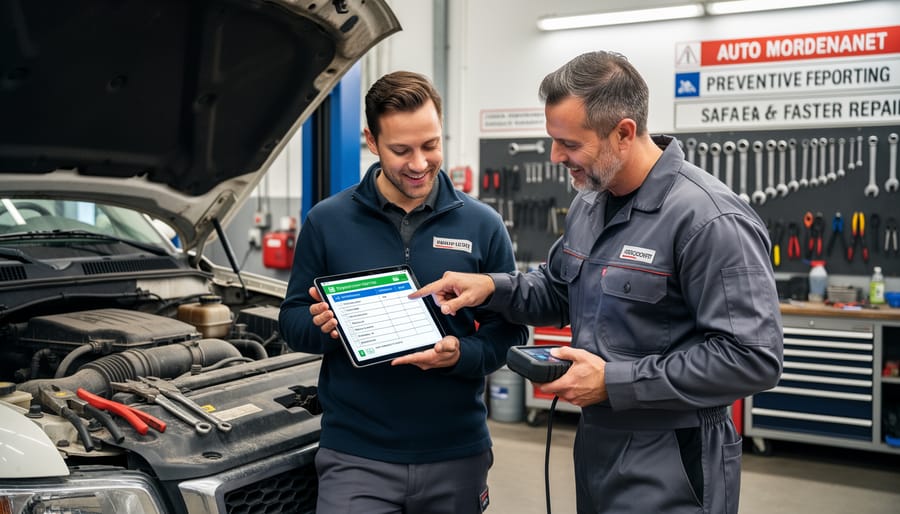
Effective driver fleet training balances theory with real-world practice. Start with a 30-to-45-minute classroom session covering Canadian Schedule 1 inspection requirements, common defect categories (brakes, lights, tires, fluid leaks), and the business impact of catching problems early. Keep presentations visual, photos of worn brake pads, cracked hoses, and tire tread depth gauges resonate more than dense slides. Use a question-and-answer format to draw out drivers’ own observations from the road, which reinforces that you value their expertise.
Immediately after the classroom portion, move to the yard or shop for hands-on walkarounds with actual fleet vehicles. Pair drivers with experienced peers or maintenance technicians who can demonstrate proper inspection techniques: checking kingpin play, testing trailer light circuits, measuring tire pressure, and spotting fluid seepage. Give each driver time to perform a supervised inspection themselves, using the company’s standard checklist, and provide constructive feedback on the spot. Adult learners retain skills fastest when they can touch, test, and ask why something matters to their daily work, so encourage questions throughout and connect every task to preventing breakdowns and staying safe on the road.
Step 5: Assess Competency and Provide Feedback
A practical assessment confirms that drivers can actually perform inspections correctly, not just recall facts. Have each driver complete a full pre-trip inspection on a vehicle while a supervisor or experienced peer observes, using the same checklist the driver will use daily. Score each item, tire pressure checks, fluid levels, light function, brake system inspection, and note missed defects or procedural shortcuts. This supervised walkthrough reveals gaps that classroom sessions can’t.
Follow up with a brief knowledge check: a five-to-ten question quiz covering defect recognition, reporting procedures, and Schedule 1 requirements under National Safety Code standards. Alternatively, conduct a short one-on-one discussion where drivers explain what they’d do if they spotted a fluid leak or worn brake lining mid-route. Drivers who struggle receive immediate coaching, not criticism, pair them with a strong peer or schedule a refresher session within the week.
Document every assessment. Issue a signed certificate of competency or add a training completion record to the driver’s file, noting the date, assessment results, and any follow-up actions. This creates an audit trail for compliance reviews and insurance claims, and gives drivers tangible recognition that reinforces the value of their new skills.
Step 6: Implement Ongoing Refresher and Feedback Loops
Training isn’t a one-time event. Schedule refresher sessions every three to six months to reinforce inspection protocols, introduce updates to equipment or regulations, and address emerging defect trends. Use these sessions to review actual defects reported by drivers since the last training, highlight examples where early detection prevented a breakdown, and discuss patterns that suggest gaps in knowledge or reporting confidence.
Track maintenance KPIs before and after each training cycle: monitor unscheduled downtime days, average repair costs per vehicle, roadside inspection outcomes, and on-time delivery percentages. Compare defect-reporting rates month over month; a sustained increase often signals that drivers feel empowered to flag issues rather than ignoring them. Share these results with your team to demonstrate the tangible impact of their vigilance.
Refine your curriculum based on data. If tire-related failures persist, dedicate more refresher time to tread depth and pressure checks. If fluid leaks are underreported, add hands-on practice identifying leak locations. Solicit driver feedback after each session, ask what topics were most useful and where they still feel uncertain, and adjust accordingly.
Build a feedback loop into daily operations: create a simple channel for drivers to report observations or suggest training topics, whether through a mobile app, logbook notes, or brief debrief conversations. When drivers see their input shaping training and fleet improvements, they become active partners in preventive maintenance, not just passive recipients of instruction.
Verification: How to Measure the Success of Your Driver Fleet Training
Track five KPIs before and after training to quantify impact. Start by recording a three-month baseline: count roadside inspection defects found by enforcement (versus those caught by drivers), log unscheduled maintenance events and their downtime hours, calculate cost-per-kilometre (fuel, repairs, parts), and tally driver-reported defects per vehicle-month. Establish these benchmarks before you train anyone, or your numbers mean nothing.
Post-training, monitor the same metrics monthly and compare trends over six to twelve months. A successful program will show fewer critical defects discovered at roadside (drivers catch them first), reduced unscheduled downtime (early intervention prevents breakdowns), and higher defect-reporting rates (proof that drivers are inspecting and logging). You should also see cost-per-kilometre drop as predictive catches replace emergency repairs, and vehicle uptime percentages climb because fewer trucks sit waiting for parts.
Use this short list of core indicators to build your tracking dashboard:
- Defect discovery rate: percentage of issues caught by drivers versus roadside inspectors or shop diagnostics
- Unscheduled maintenance events: number and duration of breakdowns requiring tow or emergency service
- Cost-per-kilometre: total maintenance and fuel spend divided by fleet distance, trended monthly
- Vehicle uptime: percentage of fleet available for dispatch, excluding maintenance downtime
- Driver engagement: defect reports filed per driver-month and post-training survey scores
Report quarterly to stakeholders with a one-page summary showing trend lines, cost savings, and compliance wins (fewer roadside violations). Include driver quotes or case examples where early reporting prevented a costly failure. Hard numbers and real stories prove ROI better than any abstract claim, and they build the case for ongoing refresher sessions and program funding.
Common Questions About Driver Fleet Training for Preventive Maintenance
How long does driver fleet training for preventive maintenance take?
A complete initial session typically runs two to three hours: 30-45 minutes of classroom instruction on inspection standards and defect recognition, followed by 60-90 minutes of hands-on walkarounds with actual vehicles. Refresher training can be condensed to 60 minutes every quarter or twice a year, focusing on seasonal hazards and any new vehicle types in the fleet.
Is driver preventive maintenance training required by law in Canada?
While no federal statute mandates formal driver preventive maintenance training, Schedule 1 of National Safety Code Standards 13 and 14 requires drivers to conduct pre-trip and post-trip inspections and report defects. Provinces enforce these inspection requirements during roadside checks, and carriers must demonstrate drivers are competent to perform them. Training creates documented proof of compliance and reduces liability.
How do you train multilingual driver teams effectively?
Provide materials and instruction in the primary languages of your drivers, at minimum, English and French for Canadian compliance, plus additional languages as needed. Use visual aids, diagrams, and hands-on demonstrations to bridge language gaps. Pair new drivers with experienced, bilingual mentors during practical sessions, and confirm comprehension through supervised inspections rather than written tests alone.
What if drivers resist training or see it as extra work?
Frame preventive maintenance training as a safety and career development tool, not a burden. Pay drivers for their training time, schedule sessions during paid hours, and highlight the direct benefits: fewer breakdowns mean less roadside stress, on-time delivery bonuses, and lower risk of violations. Involve experienced drivers as co-trainers to build peer credibility, and share real examples of how early defect reporting prevented costly repairs or accidents.
Can driver fleet training reduce insurance premiums or improve compliance scores?
Yes. Insurers and provincial enforcement agencies view documented driver training as a risk mitigation measure. Fleets with lower roadside inspection failure rates and fewer out-of-service defects often qualify for premium reductions or faster facility audits. Track your training records, competency assessments, and post-training KPIs, such as defect-reporting rates and unscheduled maintenance days, to present to insurers and regulators as evidence of proactive fleet management.
Do I need to retrain drivers when adding new vehicle types to the fleet?
Absolutely. Inspection points, fluid locations, tire configurations, and braking systems vary across vehicle classes. When you introduce straight trucks, cargo vans, or refrigerated units, conduct targeted refresher sessions on the specific differences. A 30-minute classroom overview plus a hands-on walkaround of the new vehicle type ensures drivers know what to check and where to find it.
These questions reflect the real concerns fleet managers and drivers raise when launching or expanding a preventive maintenance training program. Addressing resistance early, clarifying legal obligations, and demonstrating tangible benefits, lower costs, safer operations, compliance confidence, makes training a strategic investment rather than a compliance checkbox. When drivers understand that catching a leak or worn brake pad during a morning inspection prevents a roadside breakdown 300 kilometres from home, buy-in follows naturally.
Driver fleet training isn’t just a cost centre, it’s a proven method to cut downtime, extend vehicle lifespan, and keep your team safer on Canadian roads. When drivers know how to spot issues early, you avoid expensive breakdowns and meet compliance standards with confidence. The process is straightforward: assess your current gaps, build a curriculum that fits your fleet, deliver hands-on training, verify competency, and track results. Each step builds on the last, creating a culture where preventive maintenance becomes second nature, not an afterthought.
The return is measurable. Fleets that invest in driver training see fewer roadside defects, lower repair bills, and improved on-time delivery rates. You’re not just protecting your assets, you’re empowering your drivers to take ownership of vehicle health and safety.
If you’re ready to implement a driver fleet training program backed by a safety-first approach and operational expertise, IceCorp Logistics can help. Our private fleet management and driver staffing services are designed for Canadian businesses that demand reliability, compliance, and efficiency. Contact us today to learn how we support fleets from coast to coast with trained, safety-focused drivers and proven operational solutions.